Waco's Fixer Upper Legacy: How the Show Transformed the City (And Where to Experience It)
Before Fixer Upper, Waco was a city most people drove through on I-35 without stopping. After it — well, you've seen the traffic at the Silos on a Saturday morning.
What Chip and Joanna Gaines did to Waco is one of the more remarkable urban transformation stories in recent American history. Not a government redevelopment project. Not a tech boom. A TV show about renovating houses. And yet here we are: a mid-size Texas city that now draws over a million visitors a year, a downtown that has quietly become one of the most enjoyable in the state, and a design aesthetic so influential it reshaped how an entire generation thinks about what a home should look like.
If you're coming to Waco — or even just curious about how all of this happened — here's the story worth knowing.
Waco Before the Show
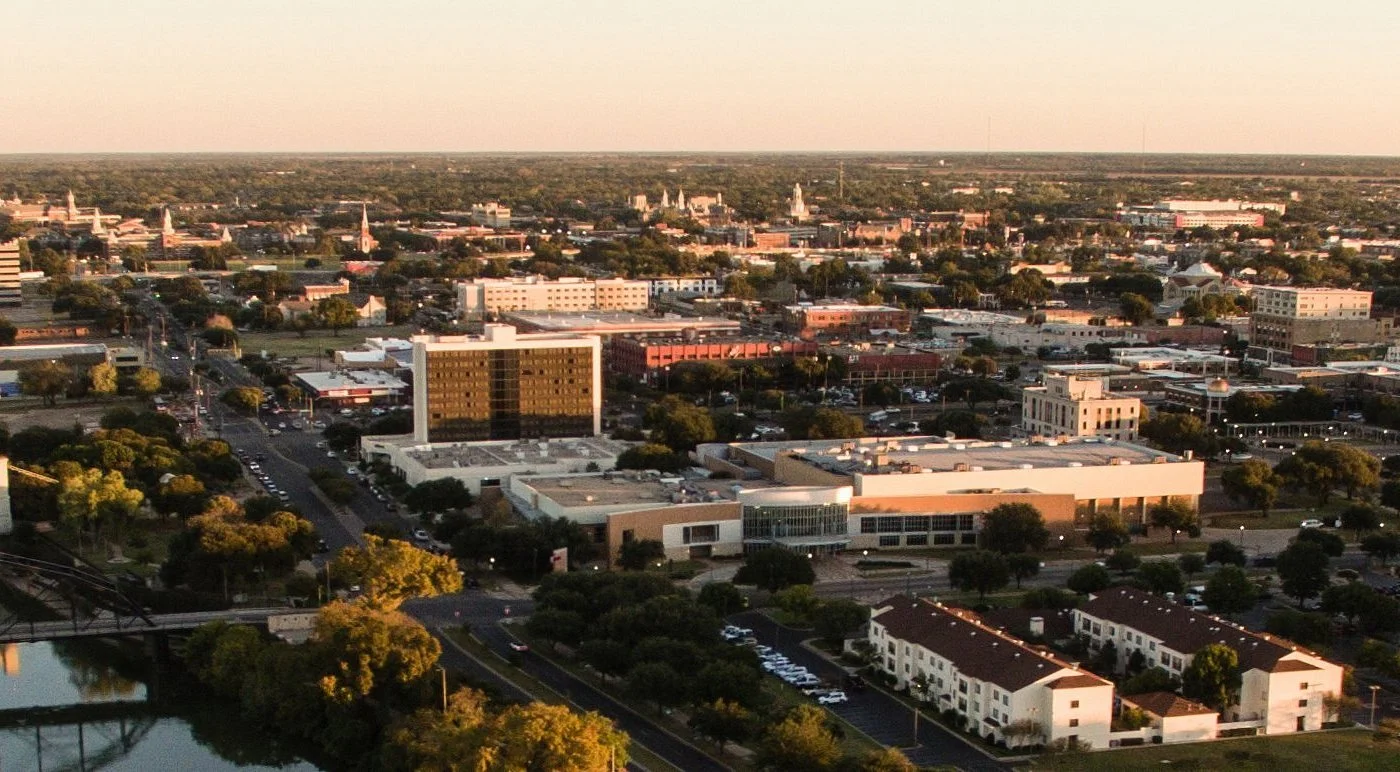
Waco in the early 2010s was a city with good bones and a rough patch behind it. The 1990s had not been kind — the Branch Davidian standoff in 1993 left a shadow over the city's national reputation that took years to fade. Downtown had the familiar struggle of many mid-century American city centers: vacancies, disinvestment, a local population that mostly bypassed it for the suburbs.
The Silos property on Webster Avenue — the two massive grain silos that are now the most photographed landmark in Central Texas — was a derelict cotton gin. The surrounding neighborhood was tired. There was no particular reason for anyone outside of McLennan County to pay much attention.
Then Chip and Joanna bought the property for a dollar.
What the Show Actually Did
Fixer Upper premiered on HGTV in 2013 and ran for five seasons before the Gaineses stepped away in 2018. The format was simple: a family with a budget, a house in or around Waco, and Chip and Joanna doing what they do. Demo day. The reveal. Joanna's signature layering of shiplap, reclaimed wood, warm neutrals, and the kind of collected-over-time detail that makes a house feel like it has always belonged to the people inside it.
What made it different wasn't the renovation format — home improvement TV had been around for decades. It was the specificity of place. Every episode was set in Waco. The city wasn't backdrop; it was character. And week after week, viewers across the country watched a city they'd never thought about before become somewhere they genuinely wanted to go.
The effect on Waco was measurable and fast. Tourism increased dramatically in the years following the show's premiere. Property values in the neighborhoods featured on the show climbed. Young professionals and entrepreneurs who might have bypassed the city started paying attention. Restaurants opened. Boutiques filled in around the Silos corridor. The downtown that had been struggling found a new pulse.
The Gaineses have been careful to point out that Waco's resurgence isn't just about them — and that's true. But it's also true that the catalyst was undeniable.
The Design Legacy
Separate from what happened to Waco the city is what happened to American home design — and the two are connected.
The "Magnolia aesthetic" is everywhere now. Shiplap walls. Subway tile. Farmhouse sinks. Open shelving. Neutral palettes anchored by natural wood and wrought iron. The particular warmth of a space that feels simultaneously simple and deeply considered. You can find versions of it in new construction from Phoenix to Pittsburgh, in rental properties from coast to coast, in every home goods aisle of every big-box store in the country.
Love it or find it overexposed, the influence is undeniable. Joanna Gaines took a design language rooted in Central Texas farmhouse tradition and made it the dominant residential aesthetic of the 2010s. That's a remarkable thing for a TV show set in Waco to have accomplished.
The interesting part, for visitors, is that Waco is where you can see the original. Not the imitation, not the mass-market version — the actual houses, the actual spaces, the actual thinking behind it. That's something no amount of shiplap at a home improvement store can replicate.
Where to Experience the Legacy in Person
Magnolia Market at the Silos
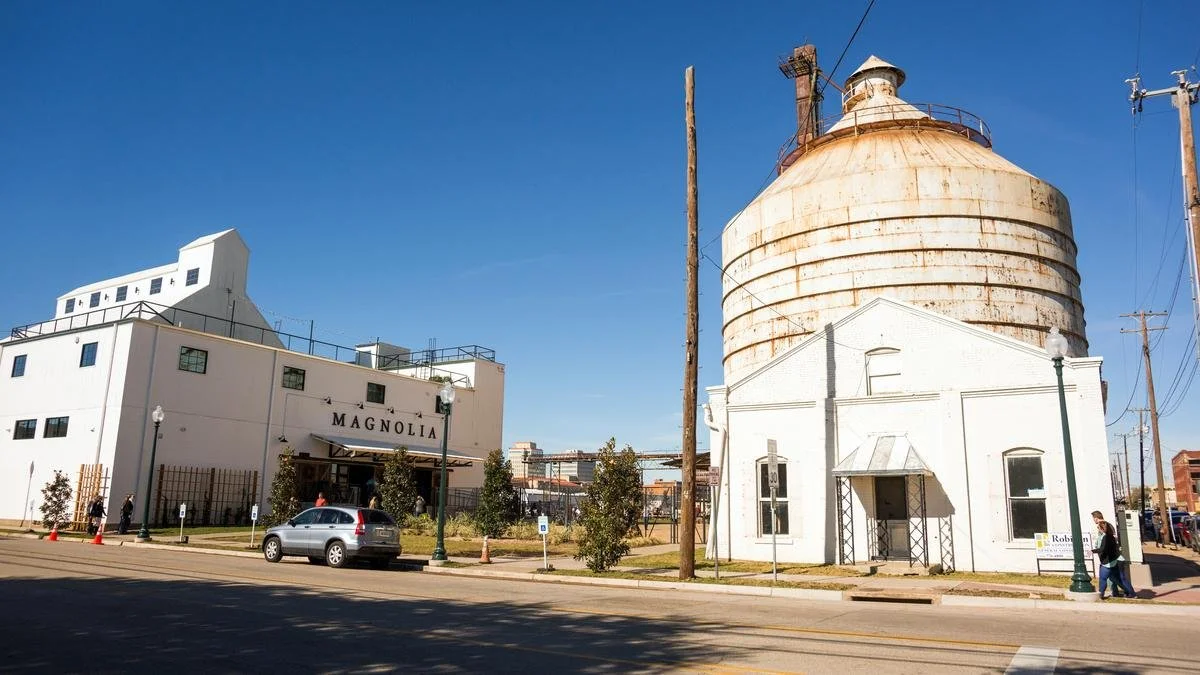
The obvious starting point, and it earns the obvious starting point status. The grain silos at 601 Webster Avenue are the physical embodiment of what the show built — a derelict property transformed into a destination that draws visitors from every state in the country and beyond.
What's worth paying attention to beyond the shopping is the design of the space itself. The way the market is merchandised, the balance of rustic and refined in every fixture and material choice, the feeling of a Saturday morning even on a Tuesday — it's all intentional, and it's all a direct expression of the same design thinking that ran through every episode of the show. Give yourself time to notice the details rather than just moving through the experience.
The Fixer Upper Homes Drive-By
Waco has a self-guided tour route that takes you past the actual houses Chip and Joanna renovated throughout the show's run. Most are private residences, but from the street you can see the finished exteriors and trace the before-and-after arc for yourself. Pull up the corresponding episode on your phone as you drive past — seeing a house in person and then watching it get transformed on screen is one of those genuinely surreal moments that only Waco can offer. The Silo District neighborhood and surrounding residential blocks have the highest concentration of Fixer Upper projects.
Magnolia Table
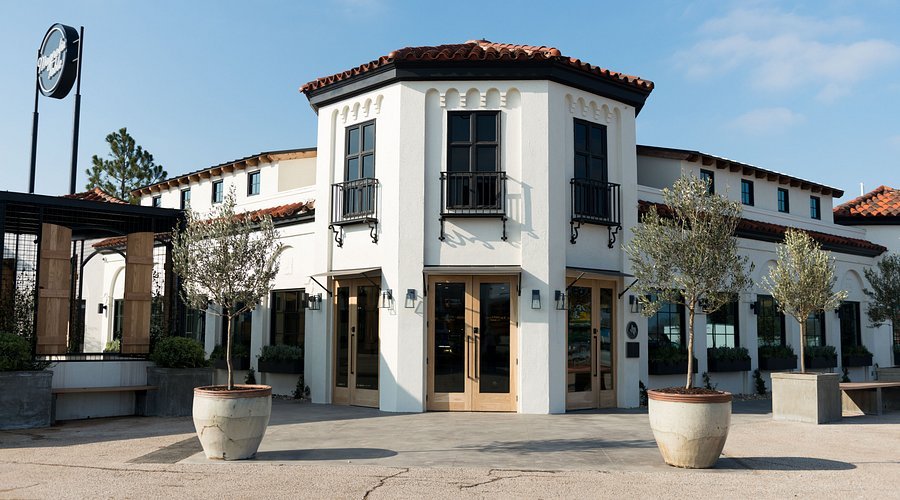
Joanna's restaurant on Bosque Boulevard carries the same warmth and intention as everything else she's built. The space itself — a converted cafeteria with unfussy, considered design — is worth studying for the same reason the Silos are: it shows the aesthetic applied to a completely different context and still working. The food is genuinely excellent, not just photogenic. Get there early or put your name in well before you plan to eat.
Stay in One of the Original Homes
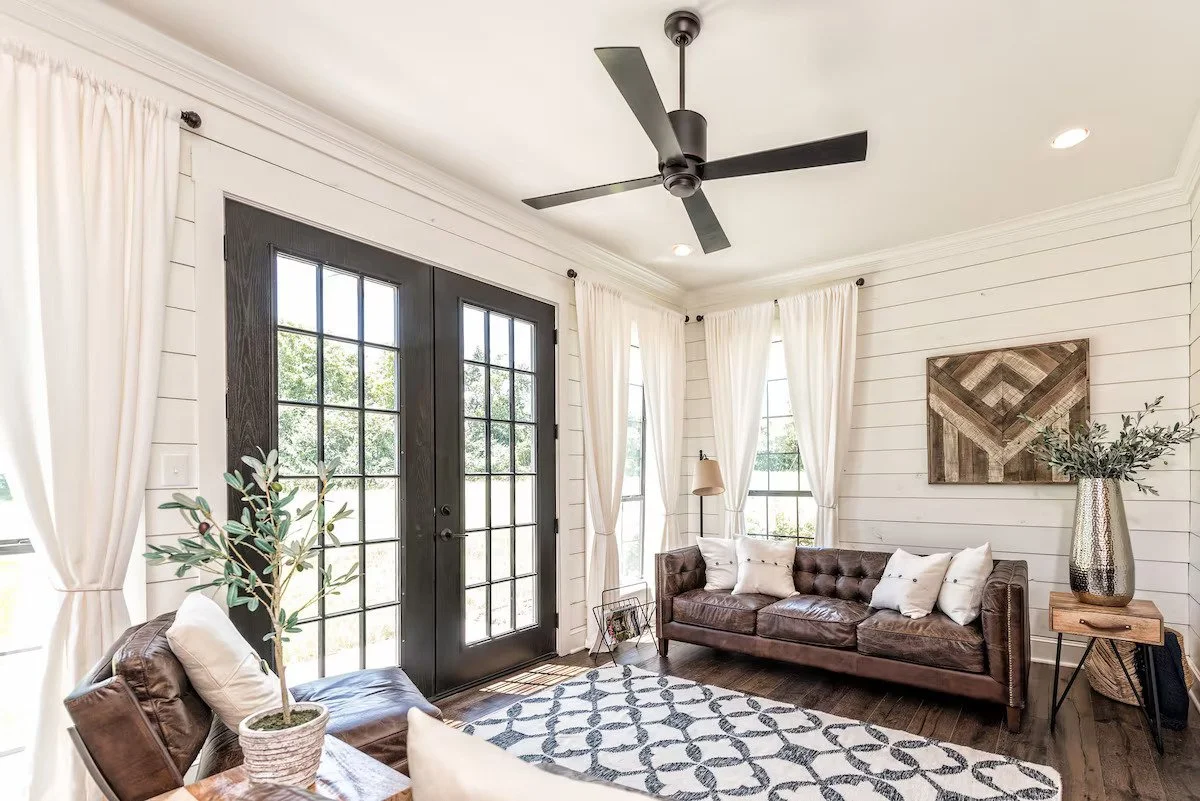
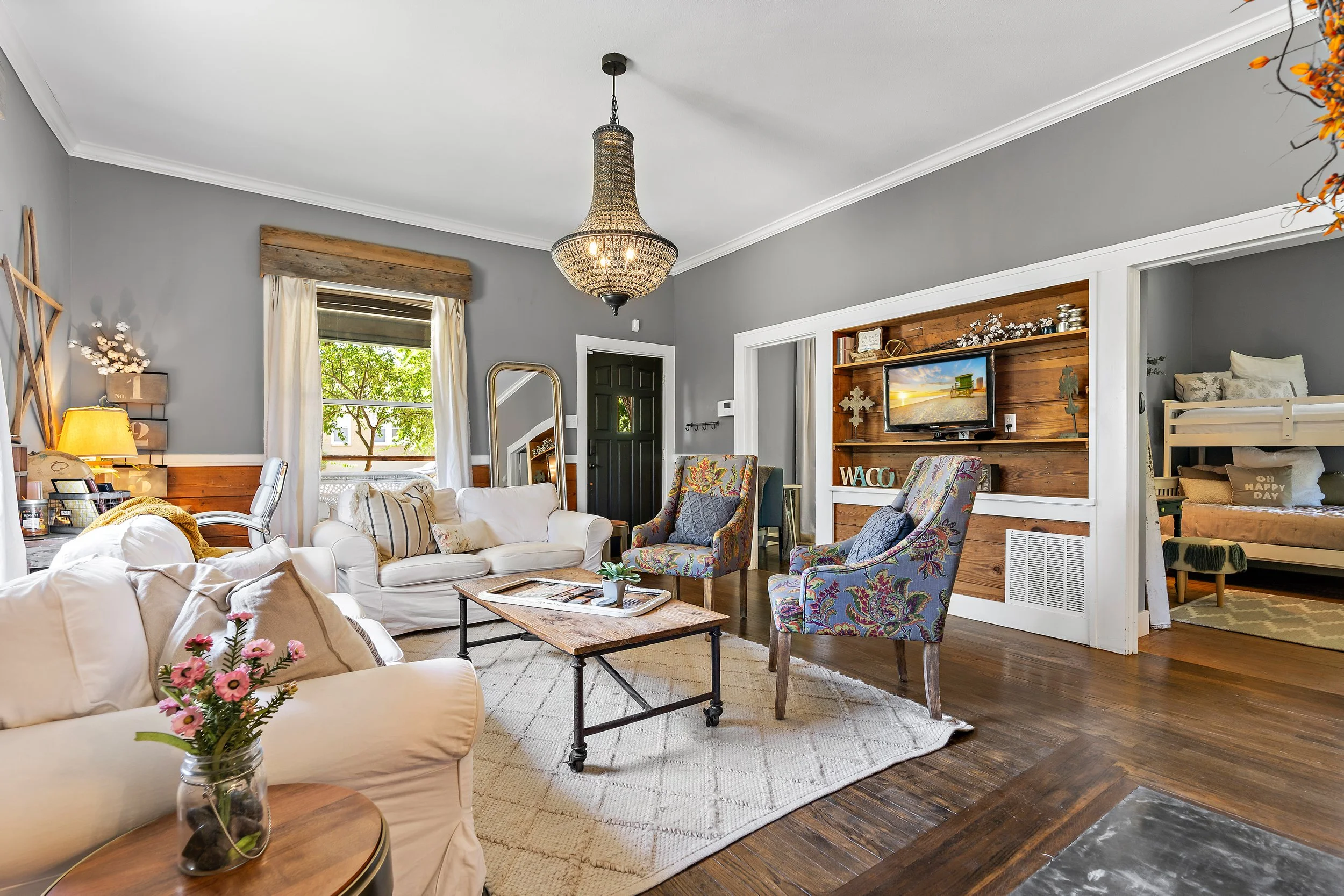
This is the part most visitors don't know is possible — and it's the part that changes the trip entirely.
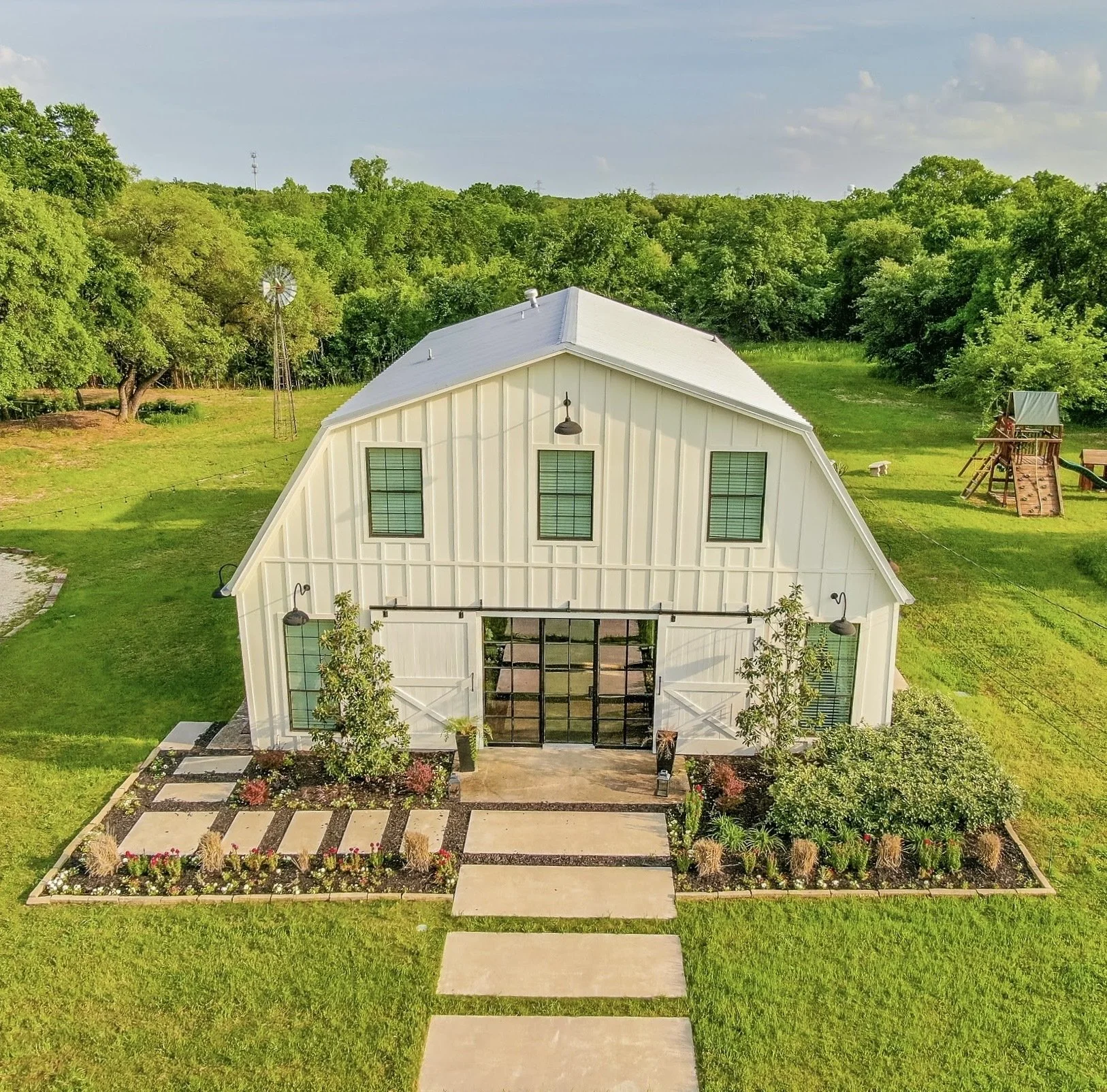
The Barndominium is Chip and Joanna's most beloved Fixer Upper project: a working horse barn on 16 private acres in Lacy-Lakeview, transformed into a chic, layered farmhouse that stopped the country in its tracks when the episode aired. The furnishings Joanna hand-selected for the show are still in place. The dramatic high ceilings, the exposed beams, the 800-square-foot covered deck overlooking the spring-fed lake — it's all there, exactly as designed, and you can actually stay in it. It sleeps 16+ across 5 bedrooms. 🏡
The Little House is the actual property from Fixer Upper Season 2, Episode 1 — the "Little House on the Prairie" episode where a pair of coffee shop owners asked Chip and Jo to build their dream home. Original wood floors, original ceilings, the fireplace Chip unearthed from inside the walls during filming, Joanna's original furniture still arranged as it appeared on screen. It sleeps 8 across 3 bedrooms, and the 200-year-old oak shading the back deck is a detail that earns its own appreciation. ☕
Staying in either property is the closest thing available to experiencing Fixer Upper from the inside. You're not near the legacy — you're inside it.
Why It Still Matters
Fixer Upper ended its original run in 2018. The Gaineses launched Magnolia Network in 2021 and have continued building what is now a genuine media and lifestyle company. But the show's impact on Waco isn't a past-tense story — it's still unfolding.
The city that was easy to drive past is now a destination people plan trips around. The design language that started in Central Texas farmhouses is now the visual grammar of American home renovation. And the actual houses — the ones you can drive past, walk through, sleep in — are still there, still warm, still exactly as they looked on screen.
That's the thing about what Chip and Joanna built. It wasn't just television. It was a place. And places, when they're made with real intention, have a way of lasting.
Waco is proof of that. Come see it for yourself.